

Your Ultimate Guide to Using an eSIM for Travel
Why fumble with physical SIM cards or expensive roaming plans when traveling? An eSIM for travel is a digital SIM embedded in your phone that lets you activate a local data plan before you even board your flight. You simply scan a QR code or enter a code to download the profile, and once you land, your device automatically connects to a local network. This gives you instant, affordable connectivity without swapping cards, and you can manage multiple plans directly from your phone’s settings.
Why Your Next Trip Needs a Digital SIM Card Instead of Roaming
You land in Lisbon, jet-lagged, and your phone pings with a roaming alert that already feels like a punch to the wallet. That’s the moment you realize why your next trip needs a digital SIM card instead of the carrier’s overpriced pass. With an eSIM for travel, you scan a QR code before boarding, and the moment the plane touches down, you’re on a local network—no physical SIM hunt, no airport kiosk queue, no surprise bill at the end of the month. You’re walking to the tram, live maps open, messaging your hostel, and the cost is a flat few euros for data you actually use. You can even toggle between your home number for calls and the travel eSIM for data in the same settings menu, so you stay reachable without sacrificing speed. Roaming feels like a relic once you’ve felt that seamless, prepaid freedom.

What exactly changes on your phone when you switch from a physical SIM to an embedded one
Switching to an embedded SIM removes the physical tray from your daily routine, as the eSIM is soldered directly onto your phone’s motherboard. You no longer swap a nano-SIM card between devices; instead, you download a carrier profile via a QR code or carrier app, which installs it into a dedicated eSIM slot in your settings. This changes how you manage connectivity: your phone now stores multiple profiles simultaneously, letting you switch active lines without powering off or ejecting any hardware. The most practical shift is that activation becomes instant and software-driven, so you can add a local data plan while abroad within minutes. Furthermore, your phone’s IMEI remains unchanged, but the eSIM’s unique identifier (EID) becomes the reference point for network authentication, a detail invisible to you but central to the new architecture. Your cellular settings gain a “default line” selector for calls and data, accompanied by toggle switches for each stored profile, replacing the old single-SIM choice. Finally, erasing or transferring the profile is a menu action, not a physical removal, which simplifies switching back to your home carrier after a trip.
The real cost difference between international data plans and local carrier rates
The real cost difference between international data plans and local carrier rates often hinges on your destination and duration. International roaming plans typically charge a flat daily fee, which can quickly exceed $10 per day, whereas local carrier rates in many regions offer prepaid data at a fraction of that cost, sometimes under $2 per gigabyte. However, purchasing a physical local SIM often requires registration and travel to a store, adding hidden time value. Factor in that a short three-day trip may make a regional plan cheaper than the hassle of sourcing a local SIM. For multi-week stays, the difference is stark, with local carrier rates often undercutting international plans by 70 percent or more per gigabyte.
How to Activate an International Data Plan Before You Board the Plane
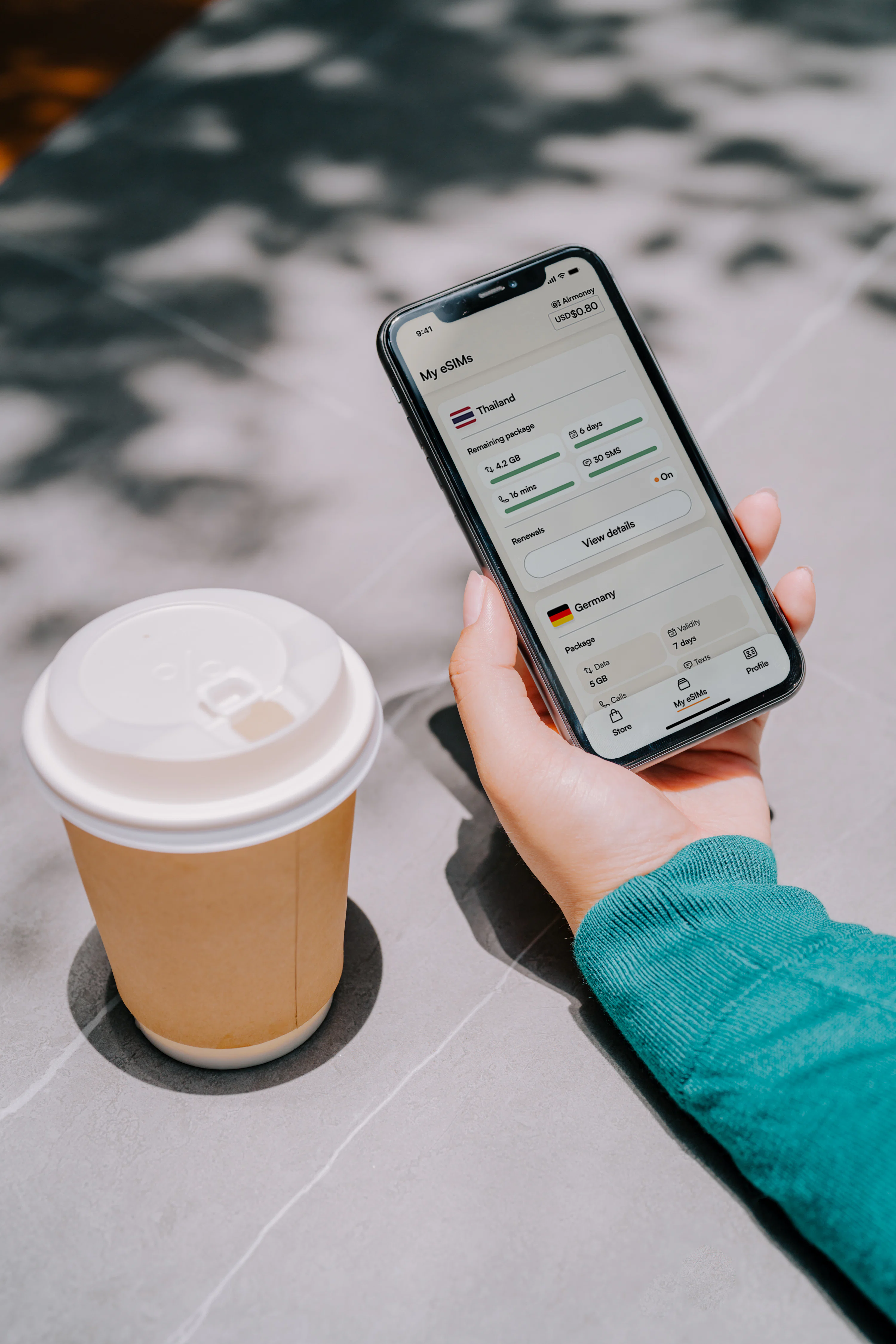
You’re at the gate, coffee in hand, when you realize your phone has no signal for your destination. With an eSIM for travel, you avoid that panic entirely by activating your plan while still on home Wi-Fi. Open your carrier’s app or scan the QR code sent to your email, then install the eSIM profile—this takes under two minutes. As long as you don’t toggle the line on until you land, your domestic SIM keeps working. Set the eSIM as your data source, enable data roaming for that line only, and run a quick speed test. Activating your travel eSIM before boarding ensures you step off the plane with maps, ride-hailing, and messaging already live—no airport kiosk, no physical SIM hunt. The trick is doing it when you still have Wi-Fi, so you can troubleshoot calmly, not while taxiing. Pre-boarding eSIM setup turns a dead zone into a non-event.

Scanning the QR code and installing your first travel data profile in under five minutes
After purchasing your travel eSIM, installing your first travel data profile in under five minutes begins with scanning the QR code provided by your carrier. Open your phone’s camera app and frame the code—your device will prompt a “Cellular Plan Detected” notification. Tap it, then confirm the plan label and default line settings. If the QR fails, enter the manual activation code under “Add eSIM” in your settings menu. Once scanned, the profile downloads instantly over Wi-Fi or cellular data, with no reboot required. On iPhone, go to Settings > Cellular; on Android, Settings > Network & Internet. Activate the new line as your data source, enable data roaming, and toggle off your physical SIM’s data. Your profile is active immediately:
- Scan the QR code from your confirmation email or PDF.
- Tap “Add Cellular Plan” and wait for the download bar to finish.
- Label it “Travel Data” and switch your default data line to it.
Then run a quick speed test—if pages load, you’re ready before boarding.
Setting up the new line as your primary data source while keeping your home number active
After installing your eSIM, open your device’s cellular settings and designate the new travel line as the primary data source, while keeping your home number active for calls and texts. Toggle cellular data to the eSIM and ensure “Allow Data Switching” is off to prevent accidental roaming charges on your physical SIM. Your home line remains reachable for iMessage, WhatsApp, and verification codes, but route default voice calls to the eSIM if you want cheaper rates. *If your phone supports Dual SIM Dual Standby, both lines operate simultaneously without disabling either.*
Q: Will keeping my home number active drain my battery or conflict with the eSIM?
A: No—modern dual-SIM management uses negligible power, and you can set the home SIM to “Secondary” for background-only use.
Picking the Right Data Package for Your Specific Travel Style
Your travel style dictates the data package you need, not the other way around. For a weekend city hopper who relies on maps and messaging, a small 1–3 GB regional package suffices—don’t overpay for unused gigabytes. If you’re a remote worker or digital nomad, prioritize an unlimited or high-capacity plan with a daily fair-use threshold, because video calls drain data faster than you expect. Adventure travelers bouncing across multiple countries should pick a regional eSIM over single-country options—it’s costlier upfront but eliminates the hassle of re-installing profiles mid-trip. Meanwhile, light users who only need WhatsApp and email can grab a 500 MB plan, but remember that background app refresh can silently eat that quota within hours. Always check the package’s hotspot and speed-tethering terms—some “unlimited” plans throttle after a few GB, ruining your streaming or navigation. Buy only what matches your actual daily consumption, not your anxiety about running out. Tailored coverage beats raw volume, and flexible validity beats the cheapest sticker price when your itinerary shifts.

Regional passes versus single-country plans—which one saves you more money on a multi-stop itinerary
For a multi-stop itinerary, a **regional eSIM pass** almost always beats buying separate single-country plans, and here’s why: the per-day cost drops the moment you cross a border. Instead of paying a fresh activation fee, re-downloading a profile, or risking a data dead zone between countries, one regional pass lets your connection hop seamlessly—so you never pay for overlapping days of coverage. To decide if it’s cheaper, run this quick check: compare the total active travel days against the sum of each country’s shortest plan—if your trip spans three or more nations, regional wins; with two nearby countries, a single-country plan for the longer stay plus a short one for the other can edge it out.
- List every country and the exact days you’ll need data in each.
- Total the cost of individual single-country plans covering those days.
- Compare that sum to the regional pass’s flat price for your entire window—if the regional total is lower or equal, buy it once and skip re-configuring mid-trip.
Choosing between data-only packages and plans with a voice number for ride-hailing and reservations
For ride-hailing and reservations, a data-only eSIM usually works fine since apps like Uber or OpenTable only need internet to confirm your pickup or book a table. However, some local drivers or smaller restaurants might call you to find your exact spot, and without a voice number, you’ll miss that call. Choosing between data-only packages and plans with a voice number for ride-hailing and reservations often comes down to how comfortable you are with text-based updates—most major platforms notify you in-app, so voice isn’t mandatory. *Yet, if you’re booking a rural guesthouse or a ride in a chaotic airport zone, that extra voice number can be a lifesaver for direct coordination.*
**Q: Should I pay more for a voice number just for ride-hailing?**
A: Only if you regularly travel to places where drivers don’t rely on app chat—otherwise, data-only keeps things cheaper and simpler.

What Happens to Coverage, Speed, and Battery Life When You Travel with an Embedded Profile
When you travel with an embedded eSIM profile, coverage depends entirely on the local networks your roaming partner has negotiated, not on the physical SIM slot—so you might experience better signal in cities but patchy rural access. Speed is typically capped at 4G/LTE or 5G depending on the plan, and real-world throughput often drops during peak hours because you’re sharing foreign network capacity with other roamers. Battery life takes a subtle hit: the eSIM actively scans for available towers more frequently in a new region, and if you keep the physical SIM active simultaneously, the phone’s radio works harder, draining power faster. *Disabling the dormant profile when you don’t need data is the simplest way to reclaim Best Asia eSIM several hours of standby time.* Finally, switching between profiles or re-downloading a plan uses a brief burst of energy, but steady-state drain returns to normal once the connection stabilizes.
Understanding how your phone switches between local towers and why speeds may vary in rural areas
Your phone continuously scans signal strength, seamlessly handing off between local towers as you move—prioritizing the strongest carrier frequency from your eSIM’s allowed network list. In rural areas, towers are spaced miles apart, and your device may cling to a weaker distant signal rather than drop the connection, which explains sudden speed dips. Terrain and foliage block line-of-sight, forcing the phone to use lower-frequency bands that travel farther but carry less data. This is why rural eSIM speed variability often feels like a 4G-to-3G shuffle. Battery drain spikes during these searches as the radio amplifies power to maintain a link.
- Handoffs between rural towers cause brief data pauses while the phone re-authenticates.
- Lower-frequency bands (700–850 MHz) penetrate obstacles but cap throughput, reducing Mbps.
- When no tower is near, your phone boosts transmit power, draining battery twice as fast.
- Congestion on a single rural tower—shared by all travelers—further throttles effective download rates.
Managing your battery drain when the device constantly searches for the best network signal
When your device hunts for the strongest tower while roaming with an embedded profile, battery drain from constant network scanning accelerates rapidly. Manually select a local network in your phone’s carrier settings to stop automatic re-scanning, especially in rural or border areas. Disable 5G and lock to 4G LTE, as lower-band signals penetrate better and require less power to maintain. Turn off data roaming when you do not need internet, but keep voice roaming active to prevent periodic searches. Also, switch your device to “2G/3G only” in extreme weak-signal zones, since a stable legacy connection consumes far less energy than repeated failed handovers. Finally, set your phone to airplane mode briefly whenever you enter a tunnel or dead zone, then disable it once you’re clear.
Prevent battery drain by manually locking networks, restricting bands, and disabling roaming data when signal is weak.
Step-by-Step Troubleshooting When the Connection Fails Mid-Trip
When your eSIM drops mid-trip, start by toggling airplane mode for 30 seconds to force a network re-registration. If that fails, open your device’s cellular settings, confirm the eSIM profile is enabled, and ensure “Data Roaming” is toggled on—many travel eSIMs require this, despite the name. Next, manually select the local carrier listed in your eSIM provider’s installation email, as automatic selection can lock onto a weaker band. Check your data balance in the provider’s app; exhausted plans often trigger a silent disconnect.
A precise fix order—airplane mode, roaming toggle, manual network, balance check, then profile re-download—resolves 90% of mid-trip drops without a support call.
If nothing works, delete and reinstall the eSIM profile using your original QR code or download link, but only when you have Wi-Fi. Avoid factory resets, as that erases local settings and can strand you with no connectivity.
Forcing your device to re-scan the local network when data stops flowing without warning
When your eSIM data halts mid-journey with no warning, the fastest fix is to force a manual network re-scan rather than waiting for your device to reconnect on its own. Navigate to your cellular settings, disable automatic carrier selection, and tap “Search Networks” or “Select Network” to refresh available local towers. After the scan completes, choose your destination carrier manually—this often clears the stale registration that causes silent drops. If the first network fails, repeat the scan and select the next listed operator. This overrides glitchy handoffs and re-authenticates your eSIM with the local tower, restoring data flow within seconds.
**Q: Why does re-scanning work when toggling airplane mode doesn’t?**
A: A re-scan forces your device to renegotiate registration with every available tower, bypassing the corrupted cached connection that airplane mode often reuses.
What to check if the profile installs correctly but you still have no internet access
If the eSIM profile installs yet you still have no internet, first confirm data roaming is enabled for that specific line, not just globally—many travel eSIMs require per-line roaming toggled on. Next, check the APN settings; manually enter the carrier’s APN (often “iotdata” or “mda”) if the profile didn’t populate it. Then, force a network rescan by turning airplane mode on for 30 seconds. Also verify that the eSIM line is set as the active data line, not the primary physical SIM, and that cellular data isn’t restricted to Wi-Fi calling. A profile can be “active” while the phone still binds to an outdated network band, so manually selecting a local network operator often resolves dead zones. Finally, restart the device once more, as background registration sometimes fails silently.
Smart Ways to Manage Your Data Usage So You Never Run Out Before the Return Flight
Before you board that return flight, your eSIM’s data can vanish fast if you’re not careful. Start by toggling off background app refresh for social feeds and email—those silent syncs eat megabytes while you’re exploring. Set your phone to download offline maps for your destination and nearby transit routes, so navigation never burns live data. On eSIM plans, streaming video is the biggest thief, so pre-load podcasts and playlists at the hotel Wi-Fi instead. You’d be surprised how much data a single hotel login page consumes if you let it auto-update in the background. Also, switch your messaging apps to send photos only when connected to Wi-Fi, and use your eSIM’s low-data mode for all non-essential apps. Keep a quick check in your settings each morning—a five-second glance can save you from a dead connection right at airport check-in. Treat your eSIM like a prepaid snack bag, not an endless buffet, and ration the heavy stuff until you’re back on free Wi-Fi.
Turning off background app refresh and auto-downloads to stretch a small data allowance
When your travel eSIM packs only a few gigabytes, disabling background app refresh and auto-downloads becomes your primary data shield. On both iOS and Android, apps silently sync, update, and fetch content while you’re navigating or queuing—burning megabytes you cannot reclaim. Before you board, open Settings and toggle off background refresh for social, news, and streaming apps; reserve it only for essential messaging. Auto-downloads for podcasts, iOS updates, or photo backups should be switched to “Wi-Fi only” or off entirely. Data leakage happens in the background, not while you browse. To lock this down:
- Disable app refresh for non-essential apps under mobile data settings.
- Turn off automatic app updates and media downloads.
- Set iCloud/Google Photos sync to manual or Wi-Fi-only.
These adjustments can stretch a 2 GB eSIM across a full week—provided you check settings again after landing, as travel time often resets device preferences.
Using offline maps and downloaded content to cut data consumption by up to half
Before activating your travel eSIM, proactively download offline maps for your destination cities and save essential content—like translation packs, entertainment, or guides—for airplane mode. This lets you navigate using GPS without pulling map data over cellular, which is a major background drain. Streaming video or music is the fastest way to burn through your allowance, so queueing downloads while on Wi-Fi means your eSIM data is reserved only for live tasks like messaging. By habitually choosing offline access for known content, you can routinely cut data consumption by up to half, stretching your prepaid balance for the entire trip.
Offline map pre-downloading also prevents automatic updates that trigger in foreign locales.
Q: How does downloading content help my eSIM last? A: Because you aren’t paying for the same file twice—you use your eSIM’s megabytes for dynamic, real-time requests only, reducing overall usage dramatically.
